International Day of Education: Inclusive Learning
This International Day of Education, Dr Gill Barrett, Education Lead at Autism Unlimited, shares her reflections and insights on developing inclusive and supportive learning environments where every student can thrive.
A holistic approach
There’s a growing recognition that education needs to be truly inclusive and accessible, moving away from the rigid, one-size-fits-all approach towards flexible frameworks that celebrate and support diverse learning needs.
“Inclusive education is much more holistic, you look at the whole person - you take that individual as an individual and not a number,” Gill explains. “It’s thinking about the whole child, knowing the child and integrating the therapeutic approach so you’re addressing their complete needs.”
When you tailor learning experiences to meet individual needs, it means each child, no matter their difference, is being supported. But when education systems fail to adapt to children, the consequences run deep.
“We get behaviour issues, disengagement and probably the mental health issues that are increasing, high levels of anxiety because they’re failing - and who wants to be told at the age of 11 or 12 that they've failed already?”
Instead, when we adapt our culture and educational practice to meet each individual, we enable every child to participate fully in school life and access the best opportunities to thrive.
Understanding behaviour as communication
A key principle of inclusive practice is recognising that behaviour is communication. When a child ‘acts out’, they’re often expressing an unmet need. Rather than simply managing the behaviour, it’s important to try and understand what they’re expressing.
“Behaviour is normally an expression of some need not being met,” she adds. “What they might be thinking, is ‘nobody’s listening to me, the only way they will listen to me is if I kick off’. People need to see that this child isn’t being naughty, they aren’t using it as an excuse, they’ve got all of these needs, but they’re not being addressed.”
Children may be struggling to cope, feeling overwhelmed or experiencing sensory challenges. For many neurodivergent children, sensory processing plays a big role, yet sensory-seeking behaviours are often misunderstood in traditional classroom settings.
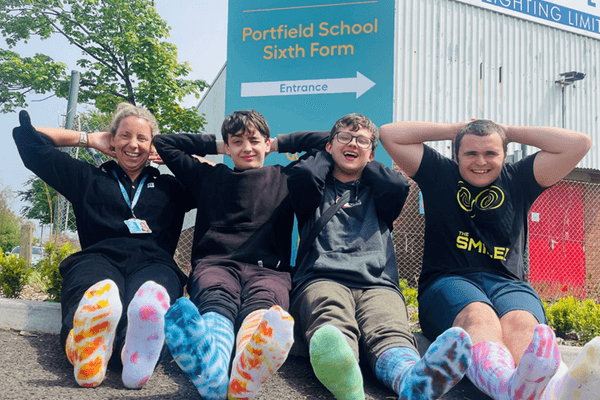
At Portfield School, this understanding is put into practice through personalised passports for every student. The document outlines their individual needs, from sensory processing requirements to support strategies, ensuring consistent, person-centred support across all interactions.
When we build our approach around the child, we can respond better to their needs and ensure they feel understood.
Behaviour isn’t something to punish; it’s something to understand.
Safe learning environments
Creating inclusive learning environments requires thoughtful consideration of physical and emotional spaces. Our therapeutic classroom checklist guides teaching staff to consider sensory needs, spatial organisation and accessibility in every decision.
“We think about how the room is set out, providing different areas around the classroom where they can retreat to, whether it’s a book nook for reading or a chill-out space,” Gill describes.
It represents a shift in perspective; instead of expecting children to adapt to inflexible learning environments, we design spaces which support each individual’s ability to feel included and engaged in learning.
Emotional safety is equally important. Strong, positive relationships with teaching staff help students feel understood and valued, which increases engagement and participation.
“They need positive relationships where they don’t feel judged, where they feel they have a voice,” she continues. “We involve students in decisions about their own learning, so they feel in control and empowered in their educational journey.”
When teaching practice, classroom environments and routines place students at the centre of their approach, it nurtures true inclusion that is meaningful and sustainable.
A therapeutic approach
Inclusive education extends far beyond just academic achievement; it equips students with skills that serve them throughout their whole journey.
We teach self-regulation; helping students recognise when they're becoming agitated, upset, or anxious, then providing them with practical techniques they can use independently throughout life.
"We give them the ability to make decisions and allow them to make mistakes, it doesn't matter if something goes wrong," Gill reflects. “Instead of being so focused on getting everything right, we look at how we would approach it differently next time.”
This approach integrates various therapies into daily learning, creating flexible opportunities for support that children can access easily. “We have a whole host of therapies, almost everything is done in a therapeutic way. We look at how we can help the whole person.”
By addressing the whole system and the whole person, we acknowledge that learning cannot be separated from wellbeing, that academic progress is tied to emotional regulation, and that every child's path to thriving looks different.
What becomes possible
Inclusive education is about making sure each child feels understood, valued and supported to fully engage with and access learning.
When we truly embrace inclusive education, see each child as an individual, and adapt our system to support them, we transform lives. This is especially powerful for neurodivergent children - they discover their strengths, gain confidence, and see a future where they can flourish.
“It’s about giving them the tools to make sure they can do all of the other things that everybody else does,” Gill emphasises.
The movement towards a culture that celebrates and supports differences is a positive one. It creates a culture of belonging, and when we build holistic learning environments, we don’t just improve educational outcomes – we open up entirely new pathways for children to reach their unique potential.